Chapter 11:
Loyalty to the Kingdom
The Kingdom of God is a real government, established by God with his Son Jesus christened as its King. Dan 7:14 says: “to him there were given rulership, honor, and a kingdom, that the peoples, nations, and language groups should all serve him. His rulership is an everlasting rulership that will not pass away, and his kingdom will not be destroyed.”
But not all people are willing to submit to this kingdom. Before the Roman governor Pilate, Jewish leaders accused Jesus of "subverting our nation and saying he himself is Christ a king." As governor, it was Pilate’s responsibility to defend the sovereignty of Rome against subversives and revolutionaries. So he asked Jesus: "Are you the king of the Jews?" Jesus answered: "My kingdom is no part of this world. If my kingdom were part of this world, my attendants would have fought that I should not be handed over to the Jews. But, as it is, my kingdom is not from this source." In effect, Jesus said, ‘Yes, I am a king; but my kingdom is different from yours; it will not be established by political revolt. My disciples are not dangerous to you.’ Although Pilate found Jesus harmless and sought to release him, the mob demanded blood, so he finally gave in to them. As governor, he should have defended the innocent, but that was not as important to him as preserving peace in the province. —John 18:36, Luke 23:2, 3, 20-25.
Today we find the same conflict between God’s Kingdom and the governments of the world. Although most nations today advertise themselves as defenders of freedom and the oppressed (yes, even totalitarian dictatorships say that), sometimes persons who are trying to be true to God and faithful to His Kingdom find themselves accused of subversion in courts of the world. True Christians do not seek to overthrow present governments. But we do teach people to put faith instead in the perfect government of God, which does expose their faults, their limitations, even their wickedness. Governments that demand total submission find this especially hard to accept.
Jesus forewarns us: "look out for yourselves; people will hand you over to local courts, and you will be. . . put on the stand before governors and kings for my sake." (Mark 13:9) This persecution is not always harmful; he added, ‘it will result in your giving a witness to them. What you are to say will be given you by holy spirit; I will give you wisdom which your opposers will not be able to dispute.’ (Luke 21:12-19) So Christians consider it a privilege to defend their obedience to God’s authority before worldly courts, and they have often had good results doing so.
The verses quoted above were part of Jesus’ prophecy of the last days. So as Christians today, we have to expect our obedience to God to put us at odds with the laws of men at times. Loyalty to the Kingdom requires us then to answer as did the apostles: "We must obey God as ruler rather than men." (Acts 5:29) Are you ready to take such a stand?
Of course, to take the correct stand, we must know what God’s law is. We surely do not want to defy man’s law needlessly because of misunderstanding God’s will. Nor do we want to obey man’s law blindly, being unaware when God would have us do otherwise. The same applies in areas other than law. For example, we may face social pressure to conform to popular customs. Not all common customs are unacceptable, but it should not surprise us to discover that many customs popular in this world are far out of harmony with God’s feelings. When we discern this to be the case, loyalty to God sets before us a choice: will we "go along to get along," or will we stand for what is right?
Everyone likes to be liked. Christians too want to be well thought of. We want people to find the Christian way of life attractive, because it is indeed the best way of living. We do not want our submission to God to be seen as unreasonable, even oppressive and cultish. On the other hand, we cannot let pleasing men become more important to us than pleasing God. Jesus said: "Everyone that confesses union with me before men [who disapprove], I will confess union with him before my Father; but whoever disowns me before men [letting them intimidate us], I will disown him before my Father." (see Matt 10:32-39 and Mark 8:38 for more.) There is no escaping it: being a true Christian will mean being regarded as peculiar, rejected, even despised, reviled, and hated, by many people of the world. "All those desiring to live with godly devotion in association with Christ Jesus will be persecuted," says 2 Tim 3:12.
We take heart from the fact that some who have opposed us violently have later become Christians themselves. Paul, one of the most zealous Christians on record, admitted that he was "formerly a blasphemer and a persecutor and an insolent man." But he was shown mercy, because he had acted out of ignorance. Unfortunately, there is still a lot of ignorance in the world. So, while remaining optimistic, true Christians do not expect to be popular. If everyone is praising you, if you fit into the community seamlessly, it is time to take stock; you may be doing something wrong. --John 15:19-21, 1 Tim 1:12, 13.
Submitting to the Law of God
The world promotes a self-centered, independent spirit. In contrast, if the Bible could be summed up in a single word, it would be obedience. Ecclesiastes 12:13 says: “The conclusion of the matter, everything having been heard, is: Fear the true God and keep his commandments. For this is the whole obligation of man.” One could make a case for stronger words such as faith, loyalty, or dedication. These add the dimensions of trust, devotion, and exclusive commitment, respectively, to simple obedience. In this discussion we mean "obedience" that includes all these. But would not "love" be a better summation of the Bible? Yes, that is the foundation of our relationship with God; it is the "greatest command." (Matt 22:36-40) How do we prove our love for God and our fellowman)? See 1 John 5:3 and 2:3-5. From Adam and Eve in Eden to the end of the Millenium, throughout the Bible the foremost issue kept in focus is this: Do we obey God or do we rebel?
But obedience has a bad name in this world. And no wonder, considering the men that have demanded obedience in our time. We rightly condemn those who obeyed Hitler or Stalin or Pol Pot (and so many others*) for not having the moral strength to DISOBEY, to resist. If only more had refused to obey, so many innocent lives would have been saved. Actually, if all people would stand up for what is right, such despots could not come into power.
How do we gain such moral courage? The answer is simple: obedience, to God. If the people had only obeyed what the judges at Nuremberg called "a higher natural law of justice", they could have stood firm. Whose law is highest? That of the sovereign of the universe, Jehovah God. Whose law is "natural"? That of the Creator of nature, Jehovah God. What is "justice"? It is what is good, what is right. The Bible assures us: “Jehovah loves justice” (Psalms 37:28) and “Jehovah is good; His loyal love endures forever” (Psalms 100:5) and “Jehovah is righteous; he loves righteous acts.” (Psalms 11:7) Love of justice, and the God of justice, will give you strength as nothing else can.
The three young Jews in Babylon gave us an example of courageous dis/obedience. Mindful of the Second Commandment ("you must not bow before any image"), they refused to give homage to an image of the State erected by the king. The penalty for this was to be death by fire. They did not know going in that they would not die, but they stood firm anyway. Jehovah saved them from the fiery furnace, and the king had to honor the true God. (Read Daniel 3, with especial attention to verses 17, 18, 24, 25, and 28.)
Christians must face a comparable test in our time. Nations today regard their national emblems with reverence very similar to that given to idols in ancient times. In many lands ceremonies honoring the flag bear a striking resemblance to the scene on the ancient plain of Dura. True Christians know how God feels about such genuflection before an image and are prepared to refuse to bow, kiss, salute, sing, recite a pledge, or whatever else the special act of devotion may be. Even though the consequences may be severe, we do not look for excuses and justifications to compromise. We preserve our life by obeying God. Men may honor themselves with high titles and pompous ceremony, but they are still just men. They may threaten, imprison, even torture and kill us for refusing to bow to their will, but they cannot end our life in God’s eyes. They cannot take away the new world that awaits us. By trusting God, we have strength to be loyal to him. (Read 1 Pet 2:13-17, 2 Cor 1:8-10, Psalm 9:18-20, 145:18-20, Luke 12:4, 5, Romans 8:35-39.)
God does tell us to be submissive to worldly rulers within moral limits, to be good citizens, to be cooperative. Therefore we do respect national emblems, in that they do represent a lawful government. We would never burn a flag (as a act of defiance) or misuse one as an article of clothing, even though such disrespect is becoming rather common today. So governments should not take our firm obedience to God as a threat. —see Romans 13:1, 2, 7.
Misplaced Loyalty
Although Satan enjoys using brute coercion, he does not always test our loyalty so directly. He actually gets more success with cunningly deceptive tactics, finding a person's blind side. The only sure defense is to truly know God; then we are morally alert, we have no blind side. As Paul said, we will "not be overreached by Satan, for we are not ignorant of his designs."
One of Satan’s designs is to "disguise himself as an angel of light," to get people to disobey God unwittingly. (2 Cor 2:11; 11:14) Goodhearted people look for ways to serve God. So if Satan can convince us that God favors a nation, or a cause that nation promotes, we could be induced to follow blindly, with misplaced loyalty. For example, German soldiers in World War I proudly wore on their belt buckles the slogan, "Gott mit uns", that is, ‘God is with us’. They were wrong. God did not support their confidence with victory. Naturally, those who won the war believed God was really on their side, but did their victory prove that? Surely they were sincerely fighting "the war to end all wars." By now we know how miserably they failed: the Great War was just the beginning of the horrors of the end times.
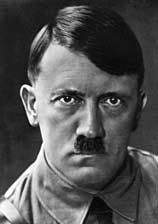
World War II was then fought to "make the world safe for democracy," yet freedom and democracy are still far from secure in this world. What provoked the second world war? Totalitarian Fascist, Communist and Nazi regimes came to power in the social and economic upheaval caused by the first world war. The people did not see totalitarianism as evil; they embraced it as the solution to the weakness, corruption, failures, and injustices of the existing governments. They were seeking justice, but rather than following the Prince of Peace, they followed that counterfeit "angel of light."
Many who thought themselves Christian supported Hitler and Mussolini enthusiastically. They found Hitler’s tough law-and-order approach to society attractive. They liked his militaristic nationalism, his extreme pride of nation. He opposed pornography, prostitution, abortion, obscenity in modern art, and homosexuality. His Nazi Party advocated discipline, punctuality, cleanliness, and respect for authority. And he had a final answer to that "Jewish question." What was there not to like?
So religious leaders willingly reassured the German people that Nazi policies did not violate tenets of Christian faith and morality. As a result, when "duty" called, they went with a clear conscience and shot Jews and other "enemies of the state" in the back en masse, even inviting their wives or girlfriends to visit and observe the carnage. There was no secrecy, and no sense of shame or guilt hindered them. Many of the atrocities were meticulously recorded and photographed.*
Satan succeeds this way again and again. Today there are many groups who claim to be "God’s army" fighting "holy war" (jihad), committing the most ungodly of atrocities in His name. 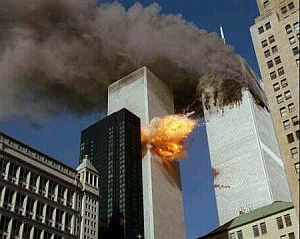 Millions rejoiced when their suicidal "holy warriors" destroyed the World Trade Center in New York, crushing almost 3,000 "infidels". No doubt the terrorists’ last words were "Allahu akbar!" (God is great!). Such is the power of Satan’s form of religion. Or as Arab journalist Ahmad al-Sarraf asked on Al Jazeera TV soon afterward: "Why don’t we have tolerance? This rhetoric of hatred is in all sermons, in all schoolbooks." That is an excellent question. We should ask ourselves: what does my religion teach? Just as important, what do its members actually do?
What about ourselves personally? Do we learn, or do we keep on allowing ourselves to be deceived? When the marching band plays patriotic music and the politicians wave the flags and the preachers fervently urge us to join the fight, do we cry "Praise the Lord and pass the ammunition!"?
Christian Warfare
Bible prophecy is clear: until the end true Christians will be a minority, a tiny minority, in a world that largely fails to know God. And until the end the world will go on fighting and carrying on wars. Grand words will ‘justify’ every side. Nothing Christians do will change that. Do we care? —Mark 13:4-13, 22.
for evil to triumph
is for good men
to do nothing"
—Edmund Burke (-?)
Absolutely. God tells us how to respond. Do we obey Him, or do we listen to what the leaders or activists of the world say must be done? God recruits us as His soldiers and equips us with effective weapons for war: His kind of war. Yes, Christians are "God’s army", but they fight a spiritual warfare. Paul describes our war at 2 Cor 10:3-5: "Though we walk in the flesh, we do not wage warfare according to the flesh. For the weapons of our warfare are not fleshly, but are powerful by God for overturning strongly entrenched things. For we are overturning reasonings and every lofty thing raised up against the knowledge of God; and we are bringing every thought into captivity to make it obedient to Christ." (see also Ecclesiastes 9:18, Daniel 11:32-34.)
Our "sword" is not made of steel; it is God’s word of truth (see our fighting equipment described at Ephesians 6:10-18; this is illustrated in Chapter 2). We do not use this "sword" aggressively, in a way that harms people. We do not compel people to bow before God. Rather, with God’s word we attack the true roots of conflict: ignorance, deception, selfishness, pride. (2 Tim 2:24-26) By teaching loyalty to the kingdom of God above any authority on earth, we point people to that "higher natural law of justice."
In this we are fulfilling a prophecy: “In the final part of the days, . . . many peoples will go and say: ‘Come, let us go up to the mountain of Jehovah, to the house of the God of Jacob. He will instruct us about his ways, and we will walk in his paths.’ . . . He will render judgment among the nations and set matters straight respecting many peoples. They will beat their swords into plowshares and their spears into pruning shears. Nation will not lift up sword against nation, nor will they learn war anymore.” Those who listen to God do not even learn how to wage war. They leave such methods behind; they find better ways to solve their differences. —Isaiah 2:2-4.
God's instruction to 'love your enemies' may not seem at first to be practical. But his wisdom always proves superior in the end. To the Muslim, violence is the honorable response to religious insult, and to the modern radical Jew, double retaliation will "teach them a lesson they won't forget!" So we have an endless exchange of exploding zealots and bulldozed houses. Mark well the peace they have achieved by such 'wisdom'. Yes, peace through violent intimidation, works every time. . .
God says: “The entire Law is fulfilled in one commandment, namely: ‘You must love your neighbor as yourself.’ If, though, you keep on biting and devouring one another, look out that you do not get annihilated by one another.” (Gal 5:14, 15) “Whatever other commandment there is, is summed up in this: ‘You must love your neighbor as yourself.’ Love does not work evil to one's neighbor; love is the law's fulfillment. . . Let us therefore throw off the works belonging to darkness and let us put on the weapons of the light. Let us walk decently . . . not in strife and jealousy.” (Rom 13:9-13) If we learn the ways of God, even though they are difficult and not without risk, we will succeed.
But of course most people will not listen. Not everyone is willing to be taught the ways of peace. So there will indeed have to be a ‘war to end all wars’. That will be God's war, and it will not need our participation. (compare 2 Chronicles 20:12, 15-17, 22, 23; see Ezekiel 38:18-23 and Rev 19:11-18. For more detail see chapter 8, Armageddon.)