Chapter 10:
"All Those in the Graves
Shall Hear His Voice"
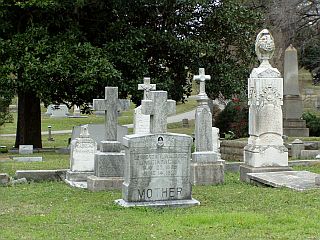
Those who have lost a friend to death know the empty feeling that death brings. When we see good people die in their prime, all their potential as if thrown away, their happy dreams and plans suddenly ending in nothing, we may wonder "Does life really have no meaning, no purpose? Are our plans also useless? Did no One care about all the good they had in mind to do? Why did this have to happen?" We may feel exposed to the cruel hand of uncaring meaninglessness, as it seems they were. We look for words of reassurance that those we loved are not really gone forever. Many comfort themselves by believing that their dear one has departed to a new life in a better place, that they have already found a new and better purpose.
On the other hand, when a hated person dies, some take satisfaction in believing that he is now suffering horribly forevermore. Good riddance! Then there are some who believe that the dead wander the earth as ghosts and expect offerings from the living. What is the truth? We do not want to believe things which are not true, even if they are comforting, do we? What does the Bible say? We can be sure that the true God, the One who gives life, tells us the truth.
In contrast, Satan from the beginning has consistently lied about death. Urging Eve to eat the forbidden fruit, Satan said: "You will not die." But God had told Adam: "In the day that you eat of it you will certainly die." Who was telling the truth?
The same day they sinned, God condemned Adam and Eve and put them out of the garden. But the next morning, they were still alive. Did that prove Satan right? No. Whether they could feel it or not, they had been damaged; they had begun to die. Like having an deadly infection, it was only a matter of time. From then on, they slowly deteriorated. Because their bodies started from a perfect condition, their end came quite slowly. Adam finally perished at the age of 930 years. Eve’s age at death was not recorded. —Genesis 2:16, 17, 3:1-24, 5:5.
But Satan does not give up easily. When we die, he cannot deny the cold, stiff body lying there. So he has promoted another lie to deny death: "You are not really dead. Only the body dies. The real person goes on to live in the invisible realm like myself." Now if that were really true, it would be very important for us to know, especially if it involves the greater part of the punishment for sin. What did God say to Adam and Eve about that?
God clearly explained to them just what death is and what it would do to them. We should look carefully at what he said, because Satan deviously contradicts it. At Genesis 3.17-19 we read: "To Adam he said: "Because you listened to your wife’s voice and ate from the tree concerning which I gave you this command, ‘You must not eat from it,’ cursed is the ground on your account. In pain you will eat its produce all the days of your life. It will grow thorns and thistles for you, and you must eat the vegetation of the field. In the sweat of your face you will eat bread until you return to the ground, for out of it you were taken. For dust you are and to dust you will return."
So according to God, their life would be miserable and difficult, under condemnation, alienated from their Father. (compare Ephesians 2:1, 12.) Finally they would die physically, and their bodies would return to dust. What then?
Did God neglect to mention anything? If the really serious punishment for their sin was to come after they died, surely he would have warned them about it. But looking at Genesis 3:20, we see that God had finished speaking. He had told Adam exactly what his punishment was: "you will return to the ground. To dust you will return." Was he talking only to Adam’s body, as a disposable shell? Or was he talking to Adam, the person himself? If he was only talking to the body, why didn’t he tell Adam, the person, what was to really become of him? No, God did not leave anything out. And the Bible consistently says: "The wages of sin is death." —Romans 6:23; see also Job 24:19, 20.
As Adam’s natural descendants, we are born with no more right to life than he could give us. We are imperfect from birth, and we cannot prevent ourselves from sinning to some extent. So Romans 5:12 says: "through one man sin entered into the world and death through sin, and thus death spread to all men because they had all sinned." "In Adam all are dying," 1 Corinthians 15:22 adds.
Because of this naturally inevitable outcome, the Bible says that mankind, condemned by God, is "dead," despite the fact we are up walking around and perhaps quite unaware of our death sentence. As the apostle Paul put it, while we are estranged from God we are "naturally children of wrath," "dead in our trespasses and sins." (Ephesians 2:1-3; see also 1 Tim 5:6.) In the Bible's original language, and in many translations, a man is often referred to as a "mortal man." Why so? The word "mortal" means "subject to death, dying." Not merely able to die, but being in a condition that inexorably ends in death. This is the opposite of immortality, and is meant to remind us of our weakness as descendants of Adam. —for example, see Psalms 8:4.
Of course we are actually alive in the literal or scientific sense. We eat, grow, love, laugh, have children. We have hopes and plans for the future. Being mortal, or condemned to die, does not stop any of that. But what about when our body does die? Does our essence, the real us, escape that death and continue to live actively on? Do we remain aware of our surroundings, able to see, hear, speak, think and feel?
Not according to God, who should know. Just as Adam returned completely to the dust, so do we. Ecclesiastes 9:5, 10 says: “For the living know that they will die, but the dead know nothing at all... Whatever your hand finds to do, do it with all your might, for there is no work nor planning nor knowledge nor wisdom in the Grave, where you are going.” —see also Job 3:11-19, Psalms 89:48.
Ecclesiastes 3:19, 20 adds: “There is an outcome for humans and an outcome for animals; they all have the same outcome. As the one dies, so the other dies; and they all have but one spirit. So man has no superiority over animals, for everything is futile. All are going to the same place. They all come from the dust, and they all are returning to the dust.” It is shocking to contemplate: by sinning Adam brought mankind’s right to life down to the same level as the beasts! Separated from God, we die just like a dog does.
What does this mean? Should we "eat and drink, for tomorrow we are to die?" That would make sense, if death was truly the end of it all forever. But it is not. —1 Corinthians 15:32.
King David loved God, and knew that his merciful heavenly Father would not abandon him to death forever. He composed a song, which in part reads: "I have set the LORD always before me; because he is at my right hand, I shall not be moved. Therefore my heart is glad, and my glory rejoices; my flesh also shall rest in hope. For you will not leave my soul in hell, neither will you suffer your holy one to see corruption. You will show me the path of life: in your presence is fulness of joy; at your right hand there are pleasures for evermore." (Psalms 16:8-11, AV; compare Job 33:25, 26) These beautiful sentiments show that David expected to go to hell when he died. But he would not perish everlastingly; God would remember him and raise him up to a joyful life again. May we have the same hope? Yes.
It is clear that David did not think of hell as a place he would live in excruciating pain, eternally separated from God. No, David knew he would just be unconscious in death, as the other scriptures above show. And he expected to get out, to be freed from hell. David spoke Hebrew, so he actually said "sheol". The King James Bible translates the Hebrew "sheol" equally as "grave" and "hell", but sheol is not two different places. So if we see the word "hell" in our Bibles we should not assume it means a place of eternal punishment. Some modern Bibles more consistently translate sheol as "grave", as was meant, or simply use the Hebrew word untranslated. (We will discuss hell at length a little later in this chapter.)
Nine hundred years later the apostle Peter quoted David’s song, then said "let me freely speak unto you of the patriarch David, that he is both dead and buried, and his tomb is with us unto this day. . . For David is not ascended into the heavens." (please read Acts 2:25-36.) Had David’s faith been misplaced? No. His song proved to be an inspired prophecy that applied first to Jesus Christ. God’s loyal Son died and was buried (in hell, or the grave), but "this Jesus God has raised up, and of this we all are witnesses."
Many witnesses could testify: Jesus was alive again! This assures us that, in due time, David will also rise from the dead. We too can trust God to remember us when we die. Like Christ, when death comes, we can say to God "into your hands I entrust my spirit." We need not dread death nor anyone who may threaten us with it. —see 1 Corinthians 15:3-6,12-22, Luke 23:46, Hebrews 2:14, 15.
For those who are faithful, this is more than a hope; it is a guarantee from God. Jesus said, "He who hears my word and believes the One who sent me has everlasting life, and he does not come into judgment but has passed over from death to life." Because our faith is alive, we are "declared righteous." That means God lifts the condemnation we naturally inherit from Adam; he no longer considers us dead in our sins. Our names are written into His "book of life", a listing of those whom He has approved. —see John 5:24, Romans 3:23, 24, 5:1-19, Ephesians 2:1-7, Philippians 4:3, Revelation 3:5, James 1:12, 2:20-26.
This does not affect our natural lifespan at present; we do go on to die. But God considers those who have been faithful as still alive in a sense. To him, our death is merely a sleep, from which he can easily awaken us. When Jesus’ friend Lazarus died, Jesus said: "Lazarus our friend has fallen asleep, but I am going there to awaken him." No, Lazarus had not gone on to another active life elsewhere; he was dead. But to God it was if he were merely sleeping.
Lazarus’ sister Martha understood that her brother was dead. When Jesus reassured her with the words, "Your brother will rise," she replied "I know he will rise in the resurrection on the last day." She did not mean the last day of Lazarus’ life: that was past, he had already been dead four days. She believed there was to be a future "last day" on which the dead would return to life.
Jesus then gave her an electrifying answer: "I am the resurrection and the life. The one who exercises faith in me, even though he dies, will come to life, and everyone that is living and exercises faith in me will never die at all." Then he proved to her and us that he has this authority over death: he went to the cave where her brother was buried and called "Lazarus, come out!" —and Lazarus got up and came out! (Read the whole account at John 11:1-44.)
Speaking to a crowd at Capernaum, Jesus said “I am the bread of life. Whoever comes to me will not get hungry at all, and whoever exercises faith in me will never get thirsty at all.... for this is the will of my Father, that everyone who recognizes the Son and exercises faith in him should have everlasting life, and I will resurrect him on the last day.... This is the bread that comes down from heaven, that anyone may eat of it and not die. I am the living bread that came down from heaven. If anyone eats of this bread he will live forever.” (John 6:35, 40, 50-58) Later, to the Pharisees at the temple he said: “Most truly I say to you, If anyone observes my word, he will never see death at all.” (John 8:51) You may be a believer, but you still eat lunch, right? Because you get hungry, and thirsty. Jesus clearly meant that we would never again hunger or thirst in a spiritual sense, not literally. It is in the same sense that we "never die at all." We do die, literally, but if we live our faith in Christ, we "come to life" in God’s eyes. We "are living" to him even while we wait in the grave. Of course, while dead we really are inactive; we "know not anything", we "sleep". But as Romans 4:17 explains, God "makes the dead alive and calls the things that are not as though they are." This applies to all those whom God approves, even to faithful ones who lived before Jesus’ time. Jesus said that Abraham, Isaac, and Jacob "are all living to him [God]" even though they were still literally dead, awaiting that "last day". —Luke 20:38; see also 1 Peter 4:6.
Jesus did not mean that those who put faith in him would go directly to their reward as soon as they died. Many years later Paul was inspired to write to the Thessalonian congregation, “Brothers, we do not want you to be ignorant about those who are sleeping in death, so that you may not sorrow as those do who have no hope. For just as we believe that Jesus died and rose again, so too, through Jesus, God will with him bring back those who are asleep. For we tell you this by the word of Jehovah: that we who live to the presence* of the Lord will in no way precede those who have fallen asleep in death; because the Lord [Jesus] himself will descend from heaven and give the command with an arch-angelic voice and with the trumpet of God, and those who are dead in union with Christ will rise first. After that, we who have survived [to that time] will together with them be caught away in clouds to meet the Lord in the air; and thus we will always be with the Lord. So keep comforting one another with these words.” —1 Thessalonians 4:13-18.
Clearly, faithful believers who died before Christ's return would have to wait, until he came to call them from their "sleep." It is possible some of the Thessalonians misunderstood Paul, because in his second letter he wrote, “Brothers, concerning the presence of our Lord Jesus Christ and our being gathered together to him, we ask you not to be quickly shaken from your reason nor to be alarmed either by an [apparently] inspired statement or by a spoken message or by a letter appearing to be from us, to the effect that the day of the Lord is already here.” (2 Thess 2:1-3) In other words, ‘hold on, we didn't say he was coming today.’ He goes on to explain “it [the Lord's day] will not come unless the apostasy comes first.” This was fulfilled over some centuries as Christianity was subverted by the introduction of worldliness and paganism. It is ending in our time, which we can clearly identify as the "last days." —see footnote in previous paragraph.
Who will be raised up from the dead? Paul said, "There is going to be a resurrection of both the righteous and the unrighteous." Of course, we expect God to restore life to those who were faithful to him. But why would he raise up unrighteous people? —Acts 24:15, James 1:12.
The Bible plainly says that some will not be raised up. Isaiah 26:10, 14 says: “Even if the wicked is shown favor, he simply will not learn righteousness. Even in the land of uprightness he will act wickedly, and he will not acknowledge the majesty of Jehovah... They are dead; they will not live. Impotent in death, they will not rise up. For you have turned your attention to them to annihilate them and destroy all mention of them.” Some have already proved themselves incorrigibly wicked. God has already passed judgment on them, and he does not need to do it again. Nor will He raise them up simply to show them what blessings they missed. "They will not rise up." They are already annihilated forever.
Who, then, are the "unrighteous" that will be raised up? The thief who died alongside Christ is one example. Clearly, he had some good qualities about him. He knew that his own crimes deserved punishment, and he had sympathy for Jesus. Why had he not followed Christ before? We do not know. But now he had no time to get baptized as a Christian. Yet he will not be forgotten; Jesus promised him, "You will be with me in Paradise." —Luke 23:32-43.
Perhaps even some of those Roman soldiers there, doing their job in executing Jesus, were not condemned forever for that. Did not Jesus say (verse 34) “Father, forgive them, for they do not know what they are doing”? Throughout history there have been many who "did not know what they were doing." Many did try to live good lives. Although ignorant and imperfect, they believed in justice and kindness. Paul refers to people like that when he says “For when people of the nations, who do not have [God's perfect] law, do by nature the things of [His] law, these people, although not having law, are a law for themselves. They demonstrate the matter of having law written in their hearts, while their conscience is bearing witness with them, and in their own thoughts they are being accused or even excused.”
How will Jesus, as Judge, deal with them? Paul finishes: “This will be in the day when God through Christ Jesus judges the secret things of mankind, according to the good news I declare.” (Rom 2:14-16.) Clearly Paul is implying that these who demonstrated godly law within their hearts will be favorably remembered, even though they were limited by their ignorance. They will return, not as righteous ones, but as persons not yet saved, not yet declared righteous. God knows that they have the potential to learn the truth and respond with faith.
What about us? Should we think, “So all I have to do is live a good life. I can stay ignorant and turn down every opportunity I have to learn about God, and still get by”? What do you think?
No. Jesus has sympathy for those who are ignorant because they have never had any clear opportunity to learn. He condemns those who refuse to learn when the opportunity is right before them. “If I had not come and spoken to them, they would have no sin; but now they have no excuse for their sin.” “If you were blind, you would have no sin. But now you say, ‘We see.’ Your sin remains.” He likens his people to sheep; when they hear the shepherd’s voice, they follow. If we clearly hear the shepherd’s voice but will not follow, we are not his sheep. —John 15:22, 9:41, 10:3, 4, 16, 27; see also 3:19-21, Hebrews 10:26, 27.
Jehovah is so loving and merciful! He does not do to us what we deserve; he remembers that we are dust! Will everyone appreciate that when they find themselves alive again in a beautiful new world? You would think so. But being resurrected will not by itself save those "unrighteous" ones. It will merely give them their first decent opportunity to come to know and love God.
Daniel 12:2 says, “Many of those asleep in the ground of dust will wake up, some to everlasting life, and others to reproaches and everlasting contempt.” So not everyone who returns will be benefited everlastingly by the experience. Some will thereafter become condemned. Jesus said the same thing: “Do not be amazed at this, for the hour is coming in which all those in the memorial tombs will hear his voice and come out, those who did good things to a resurrection of life, those who practiced vile things to a resurrection of judgment.” (John 5:28, 29) “Vile things” here simply means their sins in ignorance, not deliberate, calculated, stubborn wickedness. And the word “judgment” here comes from the Greek kriseos, from which we get the English crisis. It does not inherently mean condemnation, as some have said; it means coming to a decision as to their outcome. Because their judgment was not settled at the time they died, they will be judged then by how well they respond to their new circumstances.
Notice that when we put together all the scriptures on this subject, we come up with three kinds of resurrection: at 1 Thessalonians 4, those raised "meet the Lord in the air." This means they go to live in heaven, as explained in chapter 6 of this book. This is called the "first resurrection" in Revelation 20:6, and it is entirely before Armageddon. Then there is another resurrection in Rev 20:11-15. This one covers the other two kinds: those who are righteous but not chosen for heaven, and those who have not yet been judged.* These are raised after Armageddon to live in a "new" earth, and all of them must prove to be faithful through the final test, as explained in chapter 9. It is possible that some may fail before that, and clearly quite a few will fail that last test. Those that pass, however, will have been raised "to everlasting life" as Daniel said.
What happens to those who reject the many merciful opportunities God allows? In the Revelation, we see a vision of Judgment Day. Those who "are not found written in the book of life" are "cast into a lake of fire," said to "burn with sulfur." Is this literal? Is there an actual lake somewhere, perhaps inside this planet, where people are sent to live forever in the most horrible agony? Is this the Hell that is taught by so many religions worldwide? —Rev 20:11-15.
If you look carefully at this passage, you will notice that the dead are brought up out of "hell" (see the King James version provided in the link). Hell is emptied, then thrown into the lake. Even death itself is thrown into this lake. The people are then judged, and whoever was not written in the book of life is cast into the fiery lake. The lake is said to be the "second" death.
This account is clearly different from the traditional teaching of hell. Most people believe hell is the final place for the wicked, a place of no return forevermore. Not according to this. Clearly, people will get out, and some even will be found written in the book of life. Hell is obviously not what most people have been taught.
The English word "hell" is related to the words "hole" and "cellar"; it did not originally mean a place of fire, but was given that meaning later by the clergy. Likewise the word "inferno", which today means a raging fire such as the "hell" of the churches, comes from the Latin infernus, meaning only "low" or "underground". It is related to the word "inferior". Rather than use words now twisted by the clergy, we should look at the words originally in the Bible, and see how they were used.
The word "hell" is translated from "sheol" in Hebrew and "hades" in Greek. Earlier we noted that faithful King David expected to be in sheol temporarily, and that Jesus was not left in hades. Job described sheol for us in poetic language as a place where all the dead, good and bad alike, lie at rest, with the lifeless body being consumed by maggots. This fits with Jesus and others describing the dead as sleeping. This "hell", then, is no more than the state of being literally dead. It is not a specific location, but describes graves and death in general. It may imply God’s disfavor, or it may not. —Job 3:11-19; see also 17:13-16, Isaiah 14:4-11.
The lake of fire is quite different. It is not a place of rest with hope of arising someday; it is a "second" kind of death. We are all subject to the first kind of death, but we can avoid the second. But what is this death? Is it really a horrible kind of everlasting life?
Just as sheol is not a literal location, neither is the lake of fire. You will not find it by drilling into the earth. Rather, it is a way of describing the final condition of those judged as irreformably wicked. Earlier we quoted Isaiah 26:14, which said the wicked "will not rise up," but rather are "destroyed" or "annihilated". Fire is a fitting way to describe their end, because fire destroys utterly and irretrievably. The most effective and permanent way to get rid of garbage is to burn it.
That is what the Jews did when they put their trash into the valley of Hinnom, which served as the garbage dump for Jerusalem. Sometimes even criminals deemed unworthy of any burial were dumped, after being executed, over the wall into this valley, and either got consumed by maggots or burned. Sulfur was used to intensify the heat to burn difficult materials, such as flesh.
Many centuries before the time of Christ, the valley of Hinnom had been used for repulsive human sacrifice: parents would burn their children alive there. They called this "making them pass through the fire," perhaps believing they were passing through to an afterlife to be with the gods. Those parents were very wrong, terribly misled. Jehovah was very hurt at heart to see this happen, so hurt that he was furious. They should have known better; his law specificly forbade such things. So he desecrated and defiled their "holy place", this valley, by having it turned into the city’s garbage dump.
Reading the account at Jeremiah 7:29—8:2, you will see what else he decided to do to punish them. If, indeed, living forever in flames is the proper punishment for those whom God condemns, he seems to have forgotten to mention it. No, God does not forget anything. And throughout the Hebrew Scriptures, you will find very strong expressions of the wrath of God, sometimes with lengthy descriptions of the calamities that God would bring upon the wicked. Yet not once does he mention any everlasting torture in fire. From this we see it is not God’s way to torture the wicked alive forever; rather, he destroys them. —compare Deut 28:15-66.
What, then, is the "hellfire" that Jesus spoke of? There, he said, "the maggot does not die and the fire is not put out." (Mark 9:43-48) Well, remember Jesus did not speak English. The word he used (Gehenna) actually means "the valley of Hinnom." Those he addressed knew exactly what he was talking about: the infamous city dump of Jerusalem. He was painting a graphic word picture of what awaited them if they did not fear God: they would be thrown away like so much garbage, burned completely or consumed by maggots, with no hope of being raised up. He was not implying, nor would any of his listeners have misunderstood him to mean, that they would have to live forever in a raging fire, shrieking in pain and terror, moaning and sobbing for mercy from a merciless, uncaring God. Yet millions today believe this is the fate of those who cross God, even of those who have never heard of him. What utter cruelty! What injustice! Such a god could be feared, but never loved. No, such vicious ideas are from the twisted mind of Satan, not from the merciful God of the Bible.
We have seen many scriptures showing that the dead are aware of nothing at all. They "sleep" until being raised up for their reward at a future day. Those condemned forever are destroyed completely, "body and soul". (Matt 10:28) Yet many people ignore all of that, and point to one scripture as proof that people are tormented alive in fire after death. This is the parable of the rich man and the beggar, found at Luke 16:19-31. (please read.)
Put briefly, a rich man enjoyed his wealth but ignored the plight of a poor man in need just outside his gate. Then both died, the rich man living after death in a blazing fire, while the poor man found comfort in Abraham’s arms. The rich man asked Abraham for some relief, but was refused. What does all this mean? Is there any explanation that harmonizes with the other scriptures? Surely it would not be right to throw away the rest of the Bible, just because it presents a different picture of death.
The first key to understanding this parable is to recognize that it is a parable, not an account of an actual event. In a parable, each character or feature stands as a symbol of something which resembles it in real life. (Compare Jesus’ parable of the sower with his explanation of it, at Matt 13:3-8, 18-23.) To understand the parable of the rich man, it is helpful to realize who Jesus was talking to at the time: the Pharisees. (Luke 16:14) These were quite rich and were sometimes very disdainful of the poor. They would have understood that the rich man meant them, and the poor man represented the ordinary people they despised.
Who did "Abraham" represent? Well, Abraham was the beloved forefather of the Jews. He was dead and still sleeping in his grave, just as David was. No, he had not gone to heaven. Jesus said plainly that He himself would be the first one to rise from the dead and go to heaven (John 3:13; see also 1 Cor 15:20-23). Who, then, would "Abraham" picture? Apparently, God himself, as the loving Father of mankind.
This parable, like so many others, was a prophecy. Jesus was telling the Pharisees that they would "die" and suffer rejection by God, while the ordinary people would be comforted. This actually came true; not after literal death, but after a figurative kind of death.
When the Christian congregation was established, it was humble, ordinary people that put faith in Jesus. It was they that received the outpouring of the holy spirit at Pentecost. Hence they "died" as to their past "poor" spiritual condition. (Lu 6:20, 21; Rom 6:11) No longer did they have to beg at the gate of the educated Pharisees for the scraps of scriptures they might deign to let them hear. Now they were truly "in the arms of Abraham", the warm position of God’s approval and support. —Romans 6:2-4, 22, 23.
But for the Pharisees it was a different matter! They could see that they had been rejected. Figuratively, they had "died", they had been removed for misusing their responsibility as teachers of God’s word. Worse, the Christians relentlessly publicized this throughout the land. Truly, this was torment to them. If only they had one little drop, one little sop, a word of reassurance, to ease the pain. But no, the Christians were not to do that.
The rich man’s request for one drop of water shows the parable cannot be literal, since a person literally sitting in a fire would not ask for one mere drop of water, and that applied where it would not quench the fire. But taken as a prophetic parable, it makes a lot of sense. In fact, we can see an application of it in our time. So many clergy have acted like the Pharisees did, teaching their flocks just scraps of the Bible while living luxuriously off their tithes. But Jehovah’s Witnesses have been set free, and do not have to beg those clergy. We teach hard truths that expose those hypocrits, and this torments them. We give them no sop of kind words excusing their malfeasance.
Now that we have seen very plainly what the Bible says about death and how we can escape it, let us go back and examine two words that many are confused about: spirit and soul.
Most people think these are the same thing. They are not. They are distinct words in both Hebrew and Greek, the original languages of the Bible. In Hebrew, spirit is "ruach" and soul is "nephesh"; in Greek, spirit is "pneuma" and soul is "psykhe".
The righteous man Job made this comment: “As long as my breath is within me and spirit from God is in my nostrils, my lips will not speak unrighteousness nor will my tongue mutter deceit!” (Job 27:3, 4) By saying that the "spirit" was "in his nostrils", and making it parallel to "breath", Job gives us a clue as to what it is: a special, invisible life-breath that only God can give. Later in the book of Job we hear a wise young man say: “If he fixes his attention on them, if he gathers their spirit and breath to himself, all humans would perish together, and mankind would return to the dust.” (Job 34:14, 15) If we stop breathing long enough, we die; likewise, if we lose that "spirit", or special life-force from God, we perish.
Animals live by means of the same spirit. Ecclesiastes 3:19, quoted earlier, said that man and beasts "have but one spirit." Psalms 104 praises God for his creations, describing many animals. Then it says: "If you take away their spirit, they die and return to the dust. If you send out your spirit, they are created; and you renew the surface of the ground." (29, 30) Clearly, spirit does not refer to the individual, personal creature itself, but to something within it that causes it to live.
Speaking of a man dying of old age, Eccl 12:7 says, "Then the dust returns to the earth, just as it was, and the spirit returns to the true God who gave it." The references above make the meaning plain: the spirit that returns to God is not the man himself, but the life-force that God gives to all living creatures.
If a person loses his spirit, can he get it back? Yes. In one case, a man was found near death from exposure. King David’s men gave him nourishment; the account says "he ate and his spirit returned to him." (ftn) That is, he revived. What if a person has really died? Notice how Jesus raised up the twelve-year old girl: “He took her by the hand and called, saying ‘Girl, get up!’ And her spirit returned, and she rose instantly.” The similar expressions in these two accounts help us to see that "spirit" simply means that which enlivens a person. It is not the person himself. —1 Sam 30:11, 12; Luke 8:52-55.
As was discussed in chapter 3, Who is God?, the word "spirit" is used rather broadly in scripture. Besides our enlivening force, it also can mean one’s attitude, or degree of enthusiasm. Even today we call an enthusiastic person "spirited". Do we mean they are possessed by more ghosts than a dull ("dispirited") person? Of course not. It’s just a figure of speech, just as in the Bible.
The Hebrew word for soul (nephesh) occurs very frequently in the Hebrew scriptures, and basically means a being, a creature, a person; or, the individual, personal life that a person or animal has. (Hebrew has a different word, "chaiyim", for life in general.) Only strictly literal translations render nephesh consistently as "soul". Others translations translate the word in a variety of ways. Here is a partial listing: life, my life, your life, its life, a person, creature(s), beast(s), animal(s), being(s), I, me, you, he, him, she, herself, whoever, anyone, my heart, your heart, breath, anything living, everything living, an individual, mind, the dead, a dead person, a body, a corpse.
Astonished? You should be. In every case the original word was "nephesh", either singular or plural. Actually, such renderings are usually reasonably close to the meaning intended. The only harm done is that the readers are left unaware that all of these were covered by one word, "soul".
There are a few of these you may be wondering about. For your comparison, here side by side we show a literal translation (the New World Translation, 1984 rendering*) and less precise translations (from two popular versions; others are similar):
Gen 1:20: "And God went on to say: ‘Let the waters swarm forth a swarm of living souls and let flying creatures fly over the earth upon the face of the expanse of the heavens.’"
King James: "And God said, Let the waters bring forth abundantly the moving creature that hath life, and fowl that may fly above the earth in the open firmament of heaven."
Gen 9:4: "Only flesh with its soul--its blood--you must not eat."
King James: "But flesh with the life thereof, which is the blood thereof, shall ye not eat."
Gen 37:21: "When Reuben heard this he tried to deliver him out of their hand. So he said: ‘Let us not strike his soul fatally.’"
King James: "And Reuben heard it, and he delivered him out of their hands; and said, Let us not kill him."
Lev 24:18: "And the fatal striker of the soul of a domestic animal should make compensation for it, soul for soul."
King James: "And he that killeth a beast shall make it good; beast for beast."
Today’s English Version: "anyone killing an animal belonging to someone else must replace it. The principle is a life for a life."
Deut 24:15: "In his day you should give him his wages, and the sun should not set upon them, because he is in trouble and is lifting up his soul to his wages; that he may not cry out to Jehovah against you, and it must become sin on your part."
King James: "At his day thou shalt give him his hire, neither shall the sun go down upon it; for he is poor, and setteth his heart upon it; lest he cry against thee unto the LORD, and it be sin unto thee."
Num 6:6: "All the days of his keeping separate to Jehovah he may not come toward any dead soul."
King James: "All the days that he separateth himself unto the LORD he shall come at no dead body."
Today’s English Version: "He must not defile himself by going near a corpse." (see also Lev 19.28, 21.11, 22.4)
"Soul" is often spoken of as the person himself, and at other times, as if were something a person possesses. For example, Judges 12:3 reads, "When I got to see that you were no savior, then I determined to put my soul in my own palm and go over against the sons of Ammon." The King James Version reads, "And when I saw that ye delivered me not, I put my life in my hands, and passed over against the children of Ammon." As you can see, the expression "my soul" does not mean some ghostly entity within our body; it simply means our individual life, our life as a person. It implies our whole self, and is a stronger way of saying "myself". For example, Psalm 6:3 (New World Translation 1984) says, "my own soul has been very much disturbed." Or, "my whole being is deeply troubled." (Today's English Version) —see also Isa 29:8.
There is a popular song in Christendom with an often-repeated refrain: "And the soul never dies." Have you ever heard it? After reading the verses above, would you say it is true? The Bible plainly says: "The soul that sinneth, it shall die." (Ezek 18:20, AV; see Jas 5:20, also Psalm 89:48 again.)
When a candle goes out,
where does it go?
 |
Similarly, a person can "lose" his soul. At its simplest, that merely means he has lost his life; he is dead. When Elijah raised up the little boy, the account says "the soul of the child came back within him and he came to life." Not that his soul was living somewhere else; simply, the dead boy got his life back. —1 Kings 17:17-24.
The expression "lose one’s soul" can mean something more permanent: the person has lost his right to life; he is condemned. Notice how both the simple and extended meanings are used by Jesus at Matt 16:25, 26 (also compare the parallel account at Luke 9:24, 25.) If we "lose our soul"* (die) for Christ, we "save" or "find" it (our life will be returned to us in the resurrection), but if we seek to save ourselves in our own way, we will permanently “lose our soul” (or “self” as Luke puts it).
This makes Matt 10:28 easy to understand: "Do not become fearful of those who can kill the body (our present existence) but cannot kill the soul (our whole self, our right to life); rather be in fear of Him that can destroy (utterly annihilate) both soul and body (our total existence) in Gehenna (God’s garbage dump)."
If someone whom you truly love dies, it is normal to find it hard to accept that that one is really gone. In your heart you may never get accustomed to their absence. In fact in your grief you may imagine at times that they are still alive. You may even think you hear them moving or speaking in another room of the house.
Here is where a grave danger comes in: Satan is eager to support the false belief that your beloved is not really dead. You have to have faith that God is really telling you the truth. So do not feed your imagination. Do not answer back to imagined voices! Doing that, some have then been visited by a "ghost" that pretends to be the dead person. God emphatically forbids us from trying to talk with the dead, because He knows that we will contact the demons (fallen angels), not the dead person. —see Deut 18:9-13.
These rebel angels are enemies of God. You cannot be a friend of God and a friend of his enemies at the same time. The demons do not love you. They are very cunning and deceitful, so they can be sweet and charming for as long as it takes to pull you away from God; but once they have you, they can on a whim turn viciously ugly. Do not become involved with them! Trust Jehovah! You will see your dead beloved alive again, when the time for the resurrection arrives.
Saul, the first king to rule Israel, proved unfaithful to God, being disobedient and presumptuous on several occasions. The leading prophet at the time was Samuel, and he had to tell Saul that God had rejected him. From then on God refused to respond when Saul prayed, and Samuel would not speak to him either. Soon after that, Samuel died of old age. Later the Philistines amassed a large army to attack Israel, and Saul was terrified. Still Jehovah refused to answer his calls for help. By this time Saul’s mind had become twisted by ungodliness. He had begun to believe that it was possible to speak to the dead, despite God’s law against such things. Anyone who even tried to speak to the dead was supposed to be executed. But Saul was able to find a witch hiding in remote En-dor. There he asked her to call Samuel up out of the grave, to ask him what he should do about the Philistines. The being that rose in ghostly form from the earth looked like Samuel, and spoke as if he was Samuel, but he was not really Samuel, of course. Samuel had been a prophet of God and would never cooperate with a witch. Nor could any witch force God to pass along advice that He had refused to give by any other means. No great genius was needed to see that Saul was doomed, so the demon simply foretold the obvious: Saul would die, the Philistines would win. —1 Sam 15:22, 23, 35, 28:4-19.
Saul was not loyal to Jehovah. He did not obey and was cast away by God. We must learn from this. Do not try to speak to the dead. Instead, seek to please Jehovah by being loyal and submissive to his authority. The next chapter will explore other ways we can do this.
Imagine yourself now in the new world. At last, at last! Those long years of aching and longing, to see your innocent little child who died young, your faithful loving mate taken too soon, leaving you to grow old alone, your parents to whom you said farewell that one last time... those many years are finally over! It is finally time for Isaiah 26:19 to be fulfilled: “Your dead will live. My dead ones will rise up. Awake and shout joyfully, you residents in the dust! For your dew is as the dew of the morning, and the earth will let those powerless in death come to life.” We cannot imagine the joy as we embrace them again and welcome them to the new world, the world they longed to see before cruel death cut them short. No looking back, no wishing they had stayed longer in the old world! That is past and gone, the "former things [the days of pain] will not be called to mind, nor will they come up into the heart!" (Isaiah 65:17) They will be so delighted (maybe surprised?) to see that we made it, to see us there to greet them. Time to catch up, what did they miss, and what next? On to a glorious and endless future!
Review Questions | Back to top | On to the next chapter | Extra: Questions About the Resurrection
Gen 2:16, 17
Jehovah God also gave this command to the man: "You may eat to satisfaction from every tree of the garden, but you must not eat from the tree of the knowledge of good and bad, for in the day you eat from it you will certainly die."
Genesis 3:1-24, paraphrased:
Now the serpent . . . began to say to the woman: "Is it really so that God said you must not eat from every tree of the garden?" The woman replied to the serpent: "We may eat of the trees of the garden, but as for the tree that is in the middle of the garden, God has said, 'you must not eat from it, no, you must not touch it, that you do not die.'" Then the serpent said to the woman: "You will not die at all. In fact God knows that in the very day you eat from it your eyes shall be opened, and you shall be like God, knowing good and bad."
Then the woman saw that the tree was . . . something desirable to the eyes . . So she began taking its fruit and eating it. Later she gave some also to her husband when with her and he began eating it. Then the eyes of both of them became opened and they began to realize that they were naked. . . .
Later they heard the voice of Jehovah in the garden . . . and the man and his wife went into hiding from His face . . . And Jehovah kept calling to the man . . . Finally he said: "Your voice I heard in the garden, but I was afraid because I was naked and so I hid myself." At that he said: "Who told you that you were naked? From the tree from which I commanded you not to eat have you eaten?" The man replied: "The woman whom you gave to be with me, she gave me fruit from the tree and so I ate." Then Jehovah said to the woman: "What is this you have done?" To this the woman replied: "The serpent— it deceived me and so I ate." . . .
Then God said to the woman: "I shall greatly increase the pain of your pregnancy; in pain you will give birth to children, and your longing will be for your husband, and he will dominate you." And to Adam he said: "Because you listened to your wife and ate from the tree about which I gave you this command, 'You must not eat from it,' cursed is the ground on your account. In pain you will eat its produce all the days of your life. It will grow thorns and thistles for you . . . In the sweat of your face you will eat bread until you return to the ground, for out of it you were taken. For dust you are and to dust you will return."
After this Adam called his wife's name Eve, because she was to become the mother of everyone living. . . And Jehovah God went on to say: "Here the man has become like one of us in knowing good and bad, and now so that he may not reach out and take fruit also from the tree of life, and eat and live on without dying,—" With that Jehovah God expelled him from the garden of Eden . . . and posted at the east of the garden the cherubs and the flaming blade of a sword that was turning continually, to guard the way to the tree of life.
Genesis 5:5
So all the days of Adam amounted to 930 years, and then he died.
Ephesians 2:1, 12
. . . you were dead in your trespasses and sins . . . and you had no hope and were without God in the world.
Psalm 8:4
What is mortal man that you keep him in mind,
And a son of man that you take care of him?
Job 24:19, 20
Just as drought and heat take away the melted snow,
The Grave takes away those who have sinned!
His mother will forget him; the maggot will feast on him.
He will be remembered no more.
And unrighteousness will be broken just like a tree.
Ephesians 2:1-3
Furthermore, . . . you were then dead in your trespasses and sins, in which you at one time walked according to the way of this world, according to the ruler of the authority of the air, the spirit that now operates in the sons of disobedience. Yes, among them we all at one time conducted ourselves in harmony with the desires of our flesh, doing the will of the flesh and its way of thinking, and we were naturally children of wrath even as the rest.
1 Tim 5:6
But the one that gives herself over to immoral sensual gratification is dead, though she is living.
Job 3:11-19
Why did I not die at birth? Why did I not perish when I came from the womb? Why were there knees to receive me and breasts to nurse me? For now I would be lying down undisturbed; I would be sleeping and at rest, with kings of the earth and their advisers, who built for themselves places that are now in ruins, or with princes who possessed gold, whose houses were filled with silver. Or why was I not like a hidden miscarriage, like children who have never seen the light? There even the wicked have ceased from agitation; there the weary are at rest. There the prisoners are at ease together; they do not hear the voice of the one forcing them to work. Small and great are the same there, and the slave is set free from his master.
Psalm 89:48
What man can live and never see death? Can he save himself from the power of the Grave?
(Literally, "Can he provide escape for his soul from the hand of Sheol?" Note that Sheol, the Grave, is personified as if it has a strong "hand" that reaches up and pulls people in, and no one can escape.)
1 Cor 15:32
If . . . I have fought with wild beasts at Ephesus [have been martyred for my faith], of what good would it be to me? If the dead are not to be raised up, "let us eat and drink, for tomorrow we are to die."
Job 33:25, 26
Let his flesh become fresher than in youth; let him return to the days of his youthful vigor. He will entreat God, who will accept him, and he will see His face with shouts of joy, and He will restore His righteousness to mortal man.
Please note that the one who "will see [God's] face" also has "flesh" that is youthful. So he is not in a spirit body; he is not in heaven. "Seeing" God's face is a metaphor for a favorable relationship, not literal vision. Speaking literally, God told Moses, "You cannot see my face, for no man can see me and live." (Exodus 33:20) Job himself, after being corrected by God, said, "My ears have heard about you, but now I do see you with my eyes. That is why I take back what I said, and I repent in dust and ashes." —Job 42:6.
Acts 2:25-36
For David says about him [Christ]: “I keep Jehovah constantly in front of me, for he is at my right hand that I may never be shaken. On this account my heart became cheerful and my tongue rejoiced greatly. And I will reside in hope; because you will not leave me in the Grave [Hades, in original Greek], nor will you allow your loyal one to see corruption. You have made life's ways known to me; you will fill me with great joy in your presence.” Men, brothers, it is permissible to speak with freeness of speech to you about the family head David, that he died and was buried, and his tomb is with us to this day. Because he was a prophet and knew that God had sworn to him with an oath that he would seat one of his offspring on his throne, he foresaw and spoke about the resurrection of the Christ, that neither was he forsaken in the Grave [Hades] nor did his flesh see corruption. This Jesus God resurrected, and of this we are all witnesses. Therefore, because he was exalted to the right hand of God and received the promised holy spirit from the Father, he has poured out this that you see and hear. For David did not ascend to the heavens, but he himself says, “Jehovah said to my Lord: ‘Sit at my right hand until I place your enemies as a stool for your feet.’” Therefore, let all the house of Israel know for a certainty that God made him both Lord and Christ, this Jesus whom you executed on a stake.
1 Cor 15:3-6,12-22
For among the first things I handed on to you was what I also received, that Christ died for our sins according to the Scriptures; and he was buried, yes, then he was raised up on the third day, according to the Scriptures; and that he appeared to Cephas, and then to the Twelve. After that he appeared to more than 500 brothers at one time, most of whom are still with us, though some have fallen asleep in death.
1 Corinthians 15:12-22
Now if it is being preached that Christ has been raised from the dead, how is it that some among you say there is no resurrection of the dead? If, indeed, there is no resurrection of the dead, then Christ has not been raised up. But if Christ has not been raised up, our preaching is certainly in vain, and your faith is also in vain. Moreover, we are also found to be false witnesses of God, because we have given witness against God by saying that he raised up the Christ, whom he did not raise up if the dead are really not to be raised up. For if the dead are not to be raised up, neither has Christ been raised up. Further, if Christ has not been raised up, your faith is useless; you remain in your sins. Then also those who have fallen asleep in death in union with Christ have perished. If in this life only we have hoped in Christ, we are to be pitied more than anyone. But now Christ has been raised from the dead, the firstfruits of those who have fallen asleep in death. For since death came through a man, resurrection of the dead also comes through a man. For just as in Adam all are dying, so also in the Christ all will be made alive.
Luke 23:46
Then Jesus called out with a loud voice and said: "Father, into your hands I entrust my spirit." After he said this, he expired.
Hebrews 2:14-15
Therefore, since the "young children" are sharers of blood and flesh, he [Christ] also similarly shared in the same things, so that through his death he might bring to nothing the one having the means to cause death, the Devil, and set free all those who were held in slavery all their lives by their fear of death.
John 5:24
Most truly I say to you, whoever hears my word and believes the One who sent me has everlasting life, and he does not come into judgment but has passed over from death to life.
Romans 3:23-24
For all have sinned and fall short of the glory of God, and it is as a free gift that they are being declared righteous by his undeserved kindness through the release by the ransom paid by Christ Jesus.
Romans 5:1-19
Therefore, now that we have been declared righteous as a result of faith, let us enjoy peace with God through our Lord Jesus Christ, through whom we also have obtained access by faith into this undeserved kindness in which we now stand; and let us rejoice, based on hope of the glory of God. Not only that, but let us rejoice while in tribulations, since we know that tribulation produces endurance; endurance, in turn, an approved condition; the approved condition, in turn, hope, and the hope does not lead to disappointment; because the love of God has been poured out into our hearts through the holy spirit that was given to us. For, indeed, while we were still weak, Christ died for ungodly men at the appointed time. For hardly would anyone die for a righteous man; though perhaps for a good man someone may dare to die. But God recommends his own love to us in that, while we were yet sinners, Christ died for us. Much more, then, since we have now been declared righteous [freed of condemnation] by his blood, will we be saved through him from wrath. For if when we were enemies we became reconciled to God through the death of his Son, how much more we will be saved by his life, now that we have become reconciled. Not only that, but we are also rejoicing in God through our Lord Jesus Christ, through whom we have now received the reconciliation. That is why, just as through one man sin entered into the world and death through sin, and so death spread to all men because they had all sinned— (For sin was in the world before the Law, but sin is not charged against anyone when there is no law. Nevertheless, death ruled as king from Adam down to Moses, even over those who had not sinned in the same way Adam did, who bears a resemblance to the One who was to come.)
But the gift is not like the trespass. For though by one man’s trespass many died, the undeserved kindness of God has abounded so much more to many, by his free gift in the undeserved kindness of the one man, Jesus Christ! Also, it is not the same with the free gift as with the way things worked through the one man who sinned. For the one trespass produced a judgment of condemnation, but from the gift, after many trespasses, comes a declaration of righteousness. If by the trespass of the one man death ruled as king through him, how much more so will those who receive the abundance of the undeserved kindness and of the free gift of righteousness rule as kings in life through the one man, Jesus Christ! So, then, just as the one trespass put all men into condemnation, so by the one act of justice all men may be declared righteous for life. Through the disobedience of the one man many were made sinners*, but through the obedience of the one person many will be made righteous.
*literally, ones who fall beside. That is, miss the target, make the incomplete pass, fail to succeed.
Ephesians 2:1-7
Furthermore, God made you alive, though you were dead in your trespasses and sins, in which sins you at one time walked according to the way of this world, according to the ruler of the authority of the air, the spirit that now works in the sons of disobedience. Yes, among them we all at one time conducted ourselves in harmony with the desires of our flesh, doing the will of our flesh and its way of thinking, and we were naturally children of wrath just as the rest. But God, who is rich in mercy, for his great love with which he loved us, made us alive together with the Christ, even when we were dead in trespasses— by undeserved kindness you have been saved— and he raised us up together and seated us together in the heavenly places in union with Christ Jesus, that in the coming age* there might be demonstrated the surpassing riches of his undeserved kindness in his favor toward us in union with Christ Jesus.
*the word translated "way" in verse 1 is the same as "age" here. The basic meaning is epoch, time period.
Philippians 4:3
Yes, I request you also, as a true fellow worker, to keep assisting these women who have striven side by side with me for the good news, along with Clement as well as the rest of my fellow workers, whose names are in the book of life.
Revelation 3:5
The one who conquers will thus be dressed in white garments, and I will by no means blot out his name from the book of life, but I will acknowledge his name before my Father and before his angels.
James 1:12
Happy is the man who keeps on enduring trial, because on becoming approved he will receive the crown of life, which Jehovah promised to those who continue loving Him.
James 2:20-26
But do you care to know, O empty man, that faith without works is useless? Was not Abraham our father declared righteous by works after he offered up Isaac his son on the altar? You see that his faith was active in his works, his works perfected his faith, and the scripture was fulfilled that says: “Abraham put faith in Jehovah, and it was counted to him as righteousness,” and he came to be called “Jehovah's friend.” You see that a man is to be declared righteous by works [of faith] and not by faith alone. In the same manner, was not Rahab the prostitute also declared righteous by works, after she had received the messengers hospitably and sent them out by another way? Indeed, just as a body without spirit is dead, so faith without [its] works is dead.
John 11:1-44
Now a man named Lazarus was sick; he was from Bethany, the village of Mary and her sister Martha. This was the Mary who poured perfumed oil on the Lord and wiped his feet dry with her hair; it was her brother Lazarus who was sick. So his sisters sent a message to him, saying: “Lord, see! the one you have affection for is sick.” But when Jesus heard it, he said: “This sickness is not meant to end in death, but is for the glory of God, so that the Son of God may be glorified through it.” Now Jesus loved Martha and her sister and Lazarus. However, when he heard that Lazarus was sick, he actually remained in the place where he was for two more days. Then after this he said to the disciples: “Let us go into Judea again.” The disciples said to him: “Rabbi, just lately the Judeans were seeking to stone you, and are you going there again?” Jesus answered: “There are 12 hours of daylight, are there not? If anyone walks in daylight, he does not stumble into anything, because he sees the light of this world. But if anyone walks in the night, he stumbles, because the light is not in him.”
After he said these things, he added: “Lazarus our friend has fallen asleep, but I am traveling there to awaken him.” The disciples then said to him: “Lord, if he is sleeping, he will get well.” Jesus, however, had spoken about his death. But they imagined he was speaking about taking rest in sleep. Then Jesus said to them plainly: “Lazarus has died, and I rejoice for your sake that I was not there, so that you may believe. But let us go to him.” So Thomas, who was called the Twin, said to his fellow disciples: “Let us also go, so that we may die with him.”
When Jesus arrived, he found that Lazarus had already been in the tomb for four days. Now Bethany was near Jerusalem, about two miles away. And many of the Jews had come to Martha and Mary to console them concerning their brother.
When Martha heard that Jesus was coming, she went to meet him; but Mary kept sitting at home. Martha then said to Jesus: “Lord, if you had been here, my brother would not have died. Yet even now I know that whatever you ask God for, God will give you.” Jesus said to her: “Your brother will rise.” Martha said to him: “I know he will rise in the resurrection on the last day.” Jesus said to her: “I am the resurrection and the life. The one who exercises faith in me, even though he dies, will come to life; and everyone who is living and exercises faith in me will never die at all. Do you believe this?” She said to him: “Yes, Lord, I have believed that you are the Christ, the Son of God, the one coming into the world.” After saying that, she went off and called Mary her sister, saying privately: “The Teacher is here and is calling you.” On hearing this, she got up quickly and went to him. Jesus had not yet come into the village, but he was still in the place where Martha had met him. When the Jews who were with Mary in the house consoling her saw her get up quickly and go out, they followed her, supposing that she was going to the tomb to weep there.
When Mary arrived where Jesus was and caught sight of him, she fell at his feet and said to him: “Lord, if you had been here, my brother would not have died.” When Jesus saw her weeping and the Jews who had come with her weeping, he groaned within himself and became troubled. He said: “Where have you laid him?” They said to him: “Lord, come and see.” Jesus gave way to tears. At that the Jews began to say: “See, what affection he had for him!” But some of them said: “Could not this man who opened the eyes of the blind man prevent this one from dying?”
Then Jesus, after groaning again within himself, came to the tomb. It was, in fact, a cave, and a stone was lying against it. Jesus said: “Take the stone away.” Martha, the sister of the deceased, said to him: “Lord, by now he must smell, for it has been four days.” Jesus said to her: “Did I not tell you that if you would believe you would see the glory of God?” So they took the stone away. Then Jesus raised his eyes heavenward and said: “Father, I thank you that you have heard me. True, I knew that you always hear me; but I spoke on account of the crowd standing around, so that they may believe that you sent me.” When he had said these things, he cried out with a loud voice: “Lazarus, come out!” The man who had been dead came out with his feet and hands bound with wrappings, and his face was wrapped with a cloth. Jesus said to them: “Free him and let him go.”
Luke 20:38
He is a God, not of the dead, but of the living, for they are all living to him.
1 Peter 4:6
In fact, this is why the good news was declared also to the dead, so that although as to the flesh people see them as judged [lost or condemned], God can see them as living, as to the spirit.
Some have misinterpreted this verse as saying that Christ, while dead, went and preached to (and saved!) people in hell. No, he was really dead until the third day. The correct meaning becomes clear with the addition of a single word Peter was implying: 'the good news was declared to those who are now dead.' They were alive when they heard the good news, and put faith in it, but since then they have died. "As to the flesh, people see them as judged," that is, we see them as impotent in death, buried and gone; but "God can see them as [still] living, as to the spirit." Here "spirit" means life-breath or life-force (as explained later in this chapter), which God can and will restore to these faithful ones in his due time. From his standpoint, they are just a moment away from being alive. So do not think it is a waste of time to work hard for the good news, only to end up dead; death has been conquered. (That fits with the context in verses 1-5, which you can study on your own.)
Revelation 2:26, 27
To the one who conquers and observes my deeds down to the end I will give authority over the nations, and he will shepherd the people with an iron rod so that they will be broken to pieces like clay vessels, just as I have received from my Father.
Jas 1:12
Happy is the man that keeps on enduring trial, because on becoming approved he will receive the crown of life, which Jehovah promised to those who continue loving him.
Luke 23:32-43
Two other men, criminals, were also being led off to be executed with him. And when they got to the place called Skull, they nailed him to the stake there alongside the criminals, one on his right and one on his left. But Jesus was saying: “Father, forgive them, for they do not know what they are doing.” Furthermore, they cast lots to distribute his garments. And the people stood looking on. But the rulers were sneering and saying: “Others he saved; let him save himself if he is the Christ of God, the Chosen One.” Even the soldiers mocked him, coming up and offering him sour wine and saying: “If you are the King of the Jews, save yourself.” There was also an inscription over him: “This is the King of the Jews.” Then one of the criminals hanging there began to speak abusively to him, saying: “You are the Christ, are you not? Save yourself and us too!” In response the other rebuked him, saying: “Do you not fear God at all, now that you have received the same judgment? And we rightly so, for we are getting back what we deserve for the things we did; but this man did nothing wrong.” Then he said: “Jesus, remember me when you get into your Kingdom.” And he said to him: “Truly I tell you today, you will be with me in Paradise.”
John 15:22
If I had not come and spoken to them, they would have no sin; but now they have no excuse for their sin.
John 9:41
Jesus said to them: “If you were blind, you would have no sin. But now you say, ‘We see.’ your sin remains.”
John 10:3-4
The doorkeeper opens to this one, and the sheep listen to his voice. He calls his own sheep by name and leads them out. When he has brought all his own out, he goes ahead of them, and the sheep follow him, because they know his voice.
John 10:16
I have other sheep, which are not of this fold; those too I must bring in, and they will listen to my voice, and they will become one flock, one shepherd.
John 10:27
My sheep listen to my voice, and I know them, and they follow me.
John 3:19-21
Now this is the basis for judgment: the light has come into the world but men have loved the darkness rather than the light, for their works were wicked. For whoever practices vile things hates the light and does not come to the light, so that his works may not be reproved. But whoever does what is true comes to the light, so that his works may be made manifest as having been done in harmony with God.
Heb 10:26, 27
For if we practice sin willfully after having received the accurate knowledge of the truth, there is no longer any sacrifice for sins left, but we should have a certain fearful expectation of judgment, of a burning indignation that will consume those in opposition.
Rev 20:11-15
I saw a great white throne and the One seated on it. From before him the earth and the heaven fled away, and no place was found for them. And I saw the dead, the great and the small, standing before the throne, and books were opened. And another book was opened, the book of life. The dead were judged according to their deeds, out of the things written in the books. And the sea gave up the dead in it, and death and the Grave [Hades] gave up the dead in them, and they were judged individually according to their deeds. And death and the Grave were hurled into the lake of fire. This means the second death, the lake of fire. Furthermore, whoever was not found written in the book of life was hurled into the lake of fire.
I saw a great white throne, and him that sat on it, from whose face the earth and the heaven fled away; and there was found no place for them. And I saw the dead, small and great, stand before God; and the books were opened: and another book was opened, which is the book of life: and the dead were judged out of those things which were written in the books, according to their works. And the sea gave up the dead which were in it; and death and hell delivered up the dead which were in them: and they were judged every man according to their works. And death and hell were cast into the lake of fire. This is the second death. And whosoever was not found written in the book of life was cast into the lake of fire.
Job 3:11-19
Why did I not die at birth? Why did I not perish when I came from the womb? Why were there knees to receive me and breasts to nurse me? For now I would be lying down undisturbed; I would be sleeping and at rest, with kings of the earth and their advisers, who built for themselves places that are now in ruins, or with princes who possessed gold, whose houses were filled with silver. Or why was I not like a hidden miscarriage, like children who have never seen the light? There even the wicked have ceased from agitation; there the weary are at rest. There the prisoners are at ease together; they do not hear the voice of the one forcing them to work. Small and great are the same there, and the slave is set free from his master.
Job 17:13-16
If I wait, the Grave will become my home;
I will spread out my bed in darkness.
I will call out to the pit, You are my father!
To the maggot, My mother and my sister!
Where, then, is my hope? Who can see hope for me?
It will go down to the barred gates of the Grave
When we all descend together into the dust.
Isaiah 14:4-11
Recite this proverb against the king of Babylon: How the one forcing others to work has met his end! How the oppression has ended! Jehovah has broken the rod of the wicked, the staff of the rulers, the one furiously striking peoples with unceasing blows, the one angrily subduing nations with relentless persecution. The whole earth now rests, free of disturbance. People cry out for joy. Even the juniper trees rejoice over you, along with the cedars of Lebanon. They say, “Ever since you have fallen, no woodcutter comes up against us.” Even the Grave underneath is stirred up to meet you when you come. Because of you, it awakens those powerless in death, all the oppressive leaders of the earth. It makes all the kings of the nations rise from their thrones. All of them speak up and say to you, “Have you also become weak like us? Have you become like us? Down to the Grave your pride has been brought, the sound of your stringed instruments. Maggots are spread beneath you as a bed, and worms are your covering.”
Jeremiah 7:29—8.2
Shear off your uncut hair and throw it away, and on the bare hills raise a dirge, for Jehovah has rejected and will abandon this generation with which he is furious. For the people of Judah have done what is bad in my eyes, declares Jehovah. They have set up their disgusting idols in the house that bears my name, in order to defile it. They have built the high places of Topheth, which is in the Valley of the Son of Hinnom, in order to burn their sons and their daughters in the fire, something that I had not commanded and that had never even come into my heart.
Therefore look! the days are coming, declares Jehovah, when it will no longer be called Topheth or the Valley of the Son of Hinnom but the Valley of the Slaughter. They will bury in Topheth until there is no place left. And the dead bodies of this people will become food for the birds of the heavens and for the beasts of the earth, with no one to frighten them away. I will put an end to the sound of exultation and the sound of rejoicing, the voice of the bridegroom and the voice of the bride, in the cities of Judah and in the streets of Jerusalem, for the land will be reduced to ruins. At that time, declares Jehovah, the bones of the kings of Judah, the bones of its princes, the bones of the priests, the bones of the prophets, and the bones of the inhabitants of Jerusalem will be taken from their graves. They will be spread out to the sun and to the moon and to all the army of the heavens that they loved and served and followed and sought after and bowed down to. They will not be gathered, nor will they be buried. They will become like manure on the surface of the ground.
Deut 28:15-66
But if you will not listen to the voice of Jehovah your God by taking care to do all his commandments and his statutes that I am commanding you today, all these curses will come upon you and overtake you: Cursed you will be in the city, and cursed you will be in the field. Cursed will be your basket and your kneading bowl. Cursed will be your children and the fruit of your ground and your young cattle and sheep. Cursed you will be when you come in, and cursed you will be when you go out. Jehovah will send upon you the curse, confusion and punishment in every undertaking of yours until you have been annihilated and have quickly perished, because of your bad practices and your forsaking me. Jehovah will cause the disease to cling to you until he has exterminated you from the land you are going to take possession of. Jehovah will strike you with tuberculosis, burning fever, inflammation, feverish heat, the sword, scorching blight, and mildew; and they will pursue you until you have perished. The skies over your head will be copper, and the earth beneath you, iron. Jehovah will make the rain of your land powder and dust that will come down on you from the heavens until you have been annihilated. Jehovah will cause you to be defeated before your enemies. You will attack them from one direction, but you will flee from them in seven different directions; and you will become an object of horror to all the earth's kingdoms. And your carcasses will become food for every bird of the sky and animal of the ground, with no one to frighten them away. Jehovah will strike you with the boils of Egypt, piles, eczema, and skin lesions, from which you cannot be healed. Jehovah will strike you with madness and blindness and confusion. You will grope about at midday, just as a blind man gropes about in darkness, and you will not succeed in anything you do; and you will be constantly defrauded and robbed, with no one to save you. You will become engaged to a woman, but another man will rape her. You will build a house, but you will not live in it. You will plant a vineyard, but you will not begin to use it. Your bull will be slaughtered before your eyes, but you will not eat any of it. Your donkey will be stolen right in front of you, but it will not return to you. Your sheep will be given to your enemies, but you will have no savior. Your sons and your daughters will be given to another people while you look on, and you will always long for them, but your hands will be powerless. The fruitage of your ground and all that you produce will be eaten by a people whom you have not known, and you will always be defrauded and crushed. You will be driven mad by what your eyes see. Jehovah will strike you with painful and incurable boils on your knees and legs, from the sole of your foot to the crown of your head. Jehovah will drive you and the king whom you set up over yourself to a nation that you and your forefathers have not known, and there you will serve other gods, gods of wood and of stone. And you will become an object of horror and of scorn, and a cause for ridicule among all the peoples to whom Jehovah drives you. You will take much seed out into the field, but you will gather little, because the locust will devour it. Vineyards you will plant and cultivate, but you will drink no wine and gather nothing, because the worm will consume it. You will have olive trees in all your territory, but you will rub no oil on yourself, because your olives will drop off. Sons and daughters you will bear, but they will not remain yours, because they will go off into captivity. Swarms of insects will overwhelm all your trees and the fruitage of your ground. The foreign resident who is in your midst will keep ascending higher and higher over you, while you yourself will keep descending lower and lower. He will lend to you, but you will not lend to him. He will become the head, while you yourself will become the tail. All these curses will certainly come upon you and pursue you and overtake you until you have been annihilated, because you did not listen to the voice of Jehovah your God by keeping his commandments and his statutes that he commanded you. And they will continue on you and your offspring as a permanent sign and portent, because you did not serve Jehovah your God with rejoicing and joy of heart when you had such an abundance of everything. Jehovah will send your enemies against you, and you will serve them while you are hungry and thirsty and poorly clothed and lacking everything. He will put an iron yoke on your neck until he has annihilated you. Jehovah will raise up against you a distant nation, from the end of the earth; it will pounce like an eagle, a nation whose language you will not understand, a nation fierce in appearance that will show no regard to the old or favor to the young. They will eat the offspring of your livestock and the fruitage of your ground until you have been annihilated. They will not leave any grain, new wine or oil, young cattle or sheep for you until they have destroyed you. They will besiege you, shutting you up inside all your cities throughout your land until your high and fortified walls that you are trusting in fall down. Yes, they will certainly besiege you within all your cities throughout your land that Jehovah your God has given you. Then you will have to eat your own children, the flesh of your sons and your daughters whom Jehovah your God has given you, because of the severity of the siege and the distress your enemy inflicts on you. Even the most delicate and sensitive man among you will have no pity on his brother or his cherished wife or his sons who remain, and he will not share with them any of the flesh of his sons that he will eat, because he has nothing else on account of the severity of the siege and the distress your enemy inflicts on your cities. And the delicate and sensitive woman among you who would not even think of putting the sole of her foot on the ground because she is so delicate will show no pity to her cherished husband or her son or her daughter, even toward the afterbirth that comes from between her legs and toward the sons she bears, for she will secretly eat them because of the severity of the siege and the distress your enemy inflicts on your cities. If you will not carefully observe all the words of this Law that are written in this book and you do not fear this glorious and awe-inspiring name, that of Jehovah your God, Jehovah will inflict very severe plagues on you and your offspring, great and enduring plagues, and grievous and enduring sicknesses. He will bring back upon you all the diseases of Egypt that you used to fear, and they will certainly cling to you. Moreover, Jehovah will even bring upon you every sickness or plague not written in the book of this Law until you have been annihilated. Although you have become as numerous as the stars of the heavens, very few of your number will be left, because you did not listen to the voice of Jehovah your God. And just as Jehovah once delighted to make you prosper and to multiply you, so Jehovah will delight to destroy you and to annihilate you; and you will be torn from the land you are about to possess. Jehovah will scatter you among all the nations, from the one end of the earth to the other end of the earth, and there you will have to serve gods of wood and of stone, which you and your forefathers have not known. You will have no peace among those nations nor a place of rest for the sole of your foot. Rather, Jehovah will give you there an anxious heart and failing eyes and a feeling of despair. Your life will be in great peril, and you will feel dread night and day; and you will be uncertain of your survival.
In other words, "don't mess with me, I can hurt you bad." Yet not a peep about torture after death. Why would he not say it here, if it were in fact his foremost way of punishing the wayward?
Mark 9:43-48
If ever your hand makes you stumble, cut it off. It is better for you to enter into life maimed than to go off with two hands into Gehenna, into the fire that cannot be put out. — And if your foot makes you stumble, cut it off. It is better for you to enter into life lame than to be thrown with two feet into Gehenna. — And if your eye makes you stumble, throw it away. It is better for you to enter one-eyed into the Kingdom of God than to be thrown with two eyes into Gehenna, where the maggot does not die and the fire is not put out.
The —'s above reflect verses that occur only in later versions of ancient copies of this passage. They simply repeat the line in bold at the end. Earlier copies have that line only once, at the end as shown.
Matt 10:28
Do not become fearful of those who kill the body but cannot kill the soul; rather fear him who can destroy both soul and body in Gehenna.
Luke 16:19-31
There was a rich man who used to dress in purple and linen, enjoying himself day after day with magnificence. But a beggar named Lazarus used to be put at his gate, covered with ulcers and desiring to be filled with the things dropping from the table of the rich man. Yes, even the dogs would come and lick his ulcers. Now in the course of time, the beggar died and was carried off by the angels to Abraham's side. Also, the rich man died and was buried. And in the Grave [Hades] he lifted up his eyes, being in torment, and he saw Abraham from afar and Lazarus by his side. So he called and said, "Father Abraham, have mercy on me, and send Lazarus to dip the tip of his finger in water and cool my tongue, for I am in anguish in this blazing fire." But Abraham said, "Child, remember that you had your fill of good things in your lifetime, but Lazarus for his part received bad things. Now, however, he is being comforted here, but you are in anguish. And besides all these things, a great chasm has been fixed between us and you, so that those who want to go over from here to you cannot, neither may people cross over from there to us." Then he said, "That being so, I ask you, father, to send him to the house of my father, for I have five brothers, in order that he may give them a thorough witness so that they will not also come into this place of torment." But Abraham said, "They have Moses and the Prophets; let them listen to these." Then he said, "No, indeed, father Abraham, but if someone from the dead goes to them, they will repent." But he said to him, "If they do not listen to Moses and the Prophets, neither will they be persuaded if someone rises from the dead."
Matt 13:3-8, 18-23
Then he told them many things by illustrations [parables], saying: “Look! A sower went out to sow. As he was sowing, some seeds fell alongside the road, and the birds came and ate them up. Others fell on rocky ground where there was not much soil, and they immediately sprang up because the soil was not deep. But when the sun rose, they were scorched, and they withered because they had no root. Others fell among the thorns, and the thorns came up and choked them. Still others fell on the fine soil, and they began to yield fruit, this one 100 times more, that one 60, the other 30. . . 18 Now listen to the illustration of the man who sowed. Where anyone hears the word of the Kingdom but does not get the sense of it, the wicked one comes and snatches away what has been sown in his heart; this is the one sown alongside the road. As for the one sown on rocky ground, this is the one hearing the word and at once accepting it with joy. Yet, he has no root in himself but continues for a time, and after tribulation or persecution has arisen on account of the word, he is at once stumbled. As for the one sown among the thorns, this is the one hearing the word, but the anxiety of this system of things and the deceptive power of riches choke the word, and it becomes unfruitful. As for the one sown upon the fine soil, this is the one hearing the word and getting the sense of it, who really does bear fruit and produces, this one 100 times more, that one 60, the other 30.”
In a parable, the elements of the story stand for things or persons like that in some way in real life, but the story should not be taken as an actual specific event in real life itself. Some parables could have actually happened (as in the case of this sower of seed with wide aim) whereas others are clearly unlikely or even impossible (for example, Matthew 7:3-5). The important thing is the lesson.
Matthew 7:3-5
Why, then, do you look at the straw in your brother's eye but do not notice the rafter in your own eye? Or how can you say to your brother, “Allow me to remove the straw from your eye,” when look! a rafter is in your own eye? Hypocrite! First remove the rafter from your own eye, and then you will see clearly how to remove the straw from your brother's eye.
Luke 16:14
Now the Pharisees, who were money lovers, were listening to all these things, and they began to sneer at him. [then he started the parable of the rich man, verse 19]
John 3:13
Moreover, no man has ascended into heaven but the one who descended from heaven, the Son of man.
1 Corinthians 15:20-23
But now Christ has been raised from the dead, the firstfruits of those who have fallen asleep in death. For since death came through a man, resurrection of the dead also comes through a man. For just as in Adam all are dying, so also in the Christ all will be made alive. But each one in his own proper order: Christ the firstfruits, afterward those who belong to the Christ during his presence.
Luke 6:20, 21
He looked up at his disciples and began to say: “Happy are you who are poor, for yours is the Kingdom of God. Happy are you who hunger now, for you will be filled. Happy are you who weep now, for you will laugh.”
Romans 6:11
Likewise you: reckon yourselves to be dead with reference to sin but living with reference to God by Christ Jesus.
Romans 6:2-4, 22, 23
Seeing that we died with reference to sin, how can we keep living any longer in it? Or do you not know that all of us who were baptized into Christ Jesus were baptized into his death? So we were buried with him through our baptism into his death, in order that, just as Christ was raised up from the dead through the glory of the Father, so we also should walk in a newness of life. . . However, now that you were set free from sin and became slaves to God, you are producing your fruit in the way of holiness, and the end is everlasting life. For the wages sin pays is death, but the gift God gives is everlasting life by Christ Jesus our Lord.
1 Samuel 30:11, 12
They found an Egyptian man in the field and took him to David. They gave him food to eat and water to drink, as well as a slice of a cake of pressed figs and two cakes of raisins. After he ate, he regained his strength [literally, "his spirit returned to him"], for he had not eaten any food or drunk any water for three days and three nights.
Luke 8:52-55
But people were all weeping and beating themselves in grief for her. So he said: “Stop weeping, for she did not die but is sleeping.” At this they began to laugh at him scornfully, because they knew she had died. But he took her by the hand and called to her: “Child, get up!” And her spirit returned, and she rose immediately, and he ordered that something be given her to eat.
Isa 29:8
Yes, it will be just as when someone hungry dreams that he is eating, but he wakes up hungry [literally, "his soul is empty"], and as when someone thirsty dreams that he is drinking, but he wakes up tired and thirsty ["his soul is dried out"]. So it will happen with the crowd of all the nations that wage war against Mount Zion.
James 5:20
Know that whoever turns a sinner back from the error of his way will save him ["his soul"] from death and will cover a multitude of sins.
Psalm 89:48
What man can live and never see death? Can he save himself ["his soul"] from the power of the Grave?
Note that in the original Hebrew, the soul is referred to as if it were something the man possessed, yet it clearly goes to the Grave, not to a life elsewhere. Also, if taken literally, the man himself is something distinct from his soul. But taken as intended, it just means his own self, not a distinct, separable entity.
1 Kings 17:17-24
After these things, the son of the woman who owned the house fell sick, and his sickness became so severe that he stopped breathing. At this she said to Elijah: “What do you have against me, O man of the true God? Have you come to remind me of my guilt and to put my son to death?” But he said to her: “Give me your son.” Then he took him from her arms and carried him up to the roof chamber, where he was staying, and he laid him on his own bed. Then he called out to Jehovah: “O Jehovah my God, are you also bringing harm to the widow with whom I am staying by putting her son to death?” Then he stretched himself out over the child three times and called out to Jehovah: “O Jehovah my God, please, let this child's life [literally, "soul"] come back into him.” Jehovah listened to Elijah's request, and the life [soul] of the child came back into him, and he revived. Elijah took the child and brought him down from the roof chamber into the house and gave him to his mother; and Elijah said: “See, your son is alive.” At that the woman said to Elijah: “Now I know that you truly are a man of God and that Jehovah's word in your mouth is truth.”
Matt 16:25, 26
Whoever wants to save his life will lose it, but whoever loses his life for my sake will find it. Really, what good will it do a man if he gains the whole world but loses his life? Or what will a man give in exchange for his life?
Luke 9:24, 25
For whoever wants to save his life will lose it, but whoever loses his life for my sake is the one who will save it. Really, what good will it do a man if he gains the whole world but loses his own self or suffers ruin?
In both verses above the word translated "life" was psykhe (in a variant suited for its position in the sentence), which is Greek for "soul". Note the parallel meaning highlighted in bold in Luke's version of it. Note also you can lose your soul for a good reason or a bad reason, so it doesn't apply only to being bad; it just means dying.
Genesis 35:17-19
But while she was struggling to deliver the child, the midwife said to her: “Do not be afraid, for you will have this son also.” Just as her life was slipping away [literally, "her soul was going out"] (for she was dying), she named him Ben-oni, but his father called him Benjamin. So Rachel died and was buried on the way to Ephrath, that is, Bethlehem.
Deut 18:9-13
When you have entered into the land that Jehovah your God is giving you, you must not learn to imitate the detestable practices of those nations. There should not be found in you anyone who makes his son or his daughter pass through the fire, anyone who employs divination, anyone practicing magic, anyone who looks for omens, a sorcerer, anyone binding others with a spell, anyone who consults a spirit medium or a fortune-teller, or anyone who inquires of the dead. For anyone doing these things is detestable to Jehovah, and on account of these detestable practices Jehovah your God is driving them away from before you. You should prove yourself blameless before Jehovah your God.
1 Sam 15:22, 23, 35
Samuel then said: “Does Jehovah take as much pleasure in burnt offerings and sacrifices as in obeying the voice of Jehovah? Look! To obey is better than a sacrifice, and to pay attention than the fat of rams; for rebelliousness is the same as the sin of divination, and pushing ahead presumptuously the same as using magical power and idolatry. Because you have rejected the word of Jehovah, he has rejected you from being king.” . . . Samuel did not see Saul again until the day of his death, for Samuel went into mourning for Saul. And Jehovah regretted that he had made Saul king over Israel.
1 Sam 28:4-19
The Philistines assembled and went and set up camp in Shunem. So Saul assembled all Israel, and they set up camp in Gilboa. When Saul saw the camp of the Philistines, he was afraid, and his heart trembled greatly. Although Saul would inquire of Jehovah, Jehovah never answered him, either in dreams or by the Urim [temple dice] or through the prophets. Finally Saul said to his servants: “Find me a woman who is a spirit medium, and I will go and consult her.” His servants replied: “Look! There is a woman who is a spirit medium in En-dor.” So Saul disguised himself and put on other garments and went to the woman by night with two of his men. He said: “Use divination, please, by acting as a spirit medium, and bring up for me the one whom I designate to you.” However, the woman said to him: “You must know what Saul did, how he removed the spirit mediums and the fortune-tellers from the land. Why, then, are you trying to trap me to have me put to death?” Saul then swore to her by Jehovah, saying: “As surely as Jehovah is alive, you will not incur any guilt in this matter!” At this the woman said: “Whom should I bring up for you?” He replied: “Bring up Samuel for me.” When the woman saw "Samuel," she cried out at the top of her voice and said to Saul: “Why did you trick me? You are Saul!” The king said to her: “Do not be afraid, but what do you see?” The woman replied to Saul: “I see one like a god coming up out of the earth.” At once he asked her: “What does he look like?” to which she said: “It is an old man coming up, and he has on a sleeveless coat.” At that Saul realized that it was "Samuel," and he bowed low with his face to the ground and prostrated himself. Then "Samuel" said to Saul: “Why have you disturbed me by having me brought up?” Saul replied: “I am in great trouble. The Philistines are fighting against me, and God has departed from me and no longer answers me, either through the prophets or in dreams; so that is why I am calling on you to let me know what I should do.” And "Samuel" said: “Why do you inquire of me now that Jehovah has departed from you and has become your adversary? Jehovah will do for himself what he foretold through me: Jehovah will rip the kingdom out of your hands and give it to one of your fellow men, David. Because you did not obey the voice of Jehovah and you did not execute his burning anger against the Amalekites, that is why Jehovah is doing this to you this day. Jehovah will also give both Israel and you into the hand of the Philistines, and tomorrow you and your sons will be with me. Jehovah will also give the army of Israel into the hands of the Philistines.”
Review for Chapter 10
How did God define death to Adam?
How does Satan promote his original lie?
Who are the living dead?
What do dead people do?
Where did King David expect to go when he died?
Why should we not fear death?
What did Jesus say Lazarus was doing in the tomb? Why?
How did God guarantee the resurrection?
Why does God call the dead "alive" if they are not yet raised up?
What three distinct groups will be raised up? (Note: part of the answer is in chapter six)
What fourth group will not be brought back?
Why raise up unsaved people?
How can you ensure a resurrection for yourself?
What awaits those who despise God's mercy?
What is the Bible hell?
What was "Gehenna"?
How did its "maggots not die"?
What does the story of the rich man in Hades teach us? And what conclusion should we NOT draw from it?
What is the spirit within us?
Do animals have spirit in them? Explain.
How does the spirit "go back to God" when a creature dies?
Name the different ways the word for "soul" is translated in various Bibles.
Do animals have souls?
Does anyone have a soul?
What is a soul?
How can a person "lose" his soul? Can he ever get it back?
Why should we never try to contact the dead?
Why should questions about the resurrection not distress us?
Who do you hope to see come back to you?
Restore Scripture View